Tricks to Minimizing the Damage a Kitten Can Inflict
Published in Cats & Dogs News
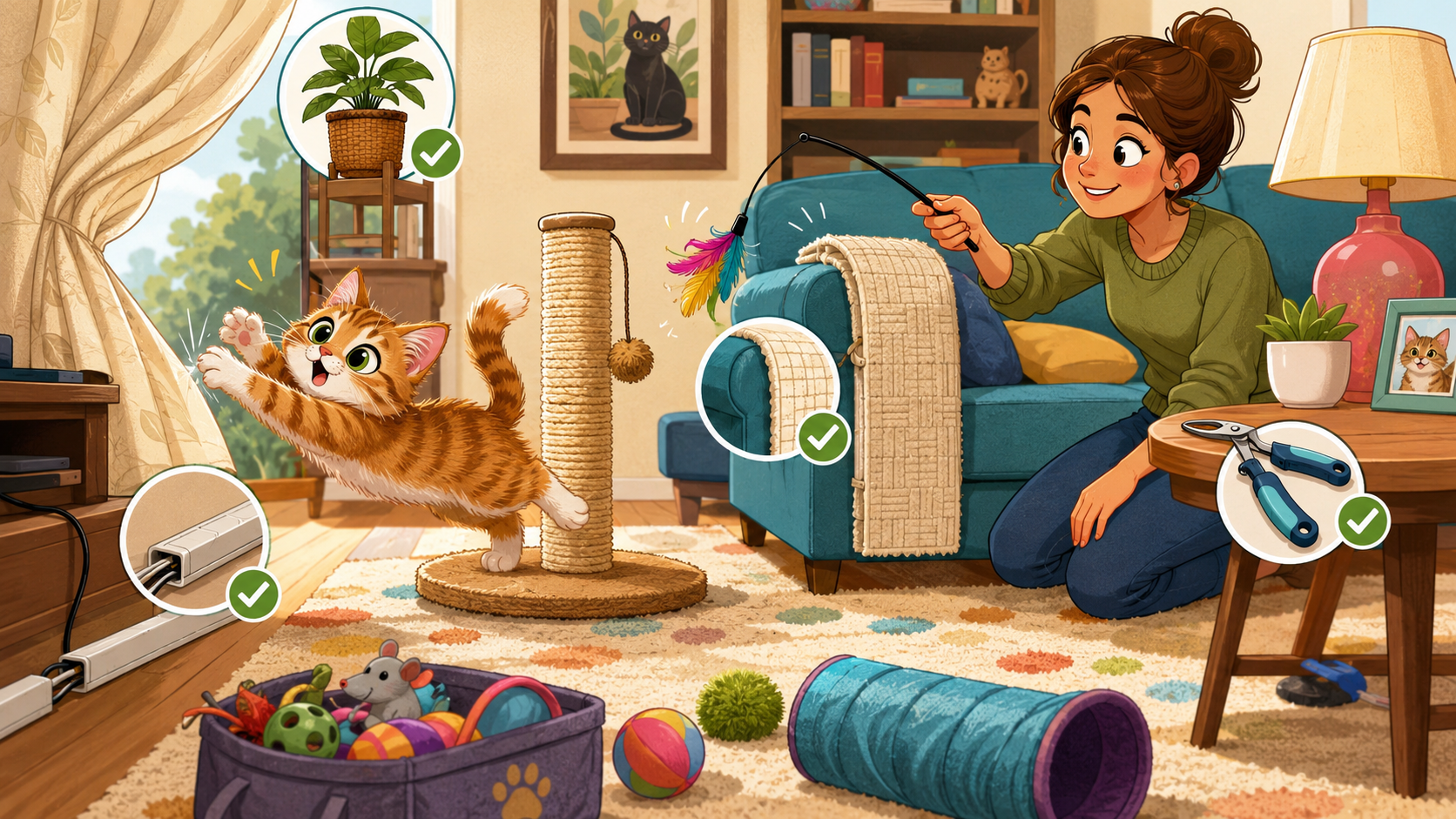
A kitten is not a pet so much as a tiny weather system with claws.
One moment it is asleep in a sunbeam, impossibly soft and innocent. The next, it is climbing the curtains, attacking toes under a blanket, chewing a phone cord and launching itself sideways off the furniture as if gravity were a rumor. Kittens are adorable, but they are also built to explore, scratch, bite, climb and practice hunting on anything that moves.
The goal is not to stop a kitten from being a kitten. That is impossible, and it would be a shame if it worked. The goal is to reduce the damage to furniture, skin, houseplants, electrical cords, curtains and household morale while helping the kitten grow into a confident, well-mannered cat.
A good kitten plan starts with accepting the obvious: Small cats are still cats. They need outlets.
Protect the house before the kitten finds it
Kitten-proofing is not glamorous, but it is cheaper than replacing a lamp, a charger or a favorite chair.
Look at the home from floor level. Loose cords, dangling blind strings, open trash cans, fragile knickknacks, rubber bands, hair ties, sewing thread, ribbon, medication, cleaning supplies and small children’s toys should be put away. Kittens can swallow things that seem too silly to worry about, and string-like objects are especially dangerous if eaten.
Houseplants deserve special attention. Some common plants are toxic to cats, and even harmless plants may be irresistible digging targets. Move plants out of reach, cover soil with large stones or use a room the kitten cannot access.
Assume the kitten will test everything. It is not pessimism. It is preparation.
Give the claws somewhere legal to go
Scratching is normal. It keeps claws healthy, stretches muscles and marks territory. A kitten that scratches furniture is not misbehaving so much as choosing from the available options.
Provide better options immediately. Use several scratching surfaces: a vertical post, a cardboard scratcher, a sisal scratcher and perhaps a horizontal pad. Place them where the kitten already wants to scratch, especially near sleeping spots, doorways and furniture corners.
A scratching post should be sturdy. If it wobbles or tips, the kitten may abandon it and return to the sofa. Praise and reward the kitten when it uses the post. Catnip may help with older kittens, though very young ones do not always respond to it.
If the kitten scratches the couch, interrupt gently and redirect to the scratcher. Do not yell, swat or frighten it. Fear does not teach the right behavior. It just teaches the kitten that people are unpredictable.
Trim claws early and often
A kitten with trimmed claws can still climb, play and scratch, but the damage is reduced.
Start slowly. Touch the kitten’s paws when it is sleepy or relaxed. Press gently to extend one claw, clip only the sharp clear tip and stop before either of you gets frustrated. One paw, or even one claw, is a successful session if the kitten stays calm.
Use proper cat nail clippers and avoid cutting too far back. The pink area inside the nail, called the quick, contains blood vessels and nerves. If you are unsure, ask a veterinarian or groomer to demonstrate.
The point is not to win a wrestling match. It is to teach the kitten that nail trims are boring, brief and followed by something pleasant.
Do not use hands as toys
It is cute when a tiny kitten attacks fingers. It is less cute when a full-grown cat thinks human hands are chew toys.
Never encourage wrestling with bare hands or feet. Use wand toys, stuffed toys, crinkle balls, soft kickers and other objects that put distance between skin and teeth. If the kitten bites or grabs too hard, stop the game briefly. Resume when it redirects to the toy.
Everyone in the household needs the same rule. One person cannot train the kitten to attack hands while another expects polite behavior. Kittens learn from repetition, not lectures.
A toy on a string should be put away after play. It is great for supervised hunting games, but loose strings can become dangerous if chewed or swallowed.
Play hard, then feed
Many kitten problems are really energy problems.
A young cat needs active play every day. Short, frequent sessions usually work better than one long one. Use a wand toy to mimic prey: dart, hide, pause, skitter and let the kitten pounce. End with a successful catch, then offer a meal or snack.
This pattern works with a cat’s natural rhythm: hunt, catch, eat, groom, sleep. A kitten that gets satisfying play is less likely to invent its own entertainment by attacking ankles or climbing curtains at midnight.
Even a few minutes of focused play before bed can help, though no kitten will become instantly civilized. Some chaos is part of the package.
Make furniture less rewarding
If the kitten has already chosen a sofa, chair or curtain as a target, make that choice less satisfying while offering better alternatives nearby.
Temporary furniture covers, double-sided sticky tape, washable throws or plastic protectors can discourage scratching while the kitten learns. Keep a scratching post next to the problem area. Reward the kitten for using the post, not the furniture.
For curtains, tie them up or keep them out of reach during the wildest kitten stage. It may not look elegant, but neither does a kitten halfway up the drapes with the rod bending under its ambition.
Do not rely on punishment. A squirt bottle may stop behavior in the moment, but it can also make the kitten wary of people. Prevention and redirection are more reliable.
Create a safe room
A kitten does not need full access to the house on day one.
A safe room gives the kitten a manageable territory with food, water, litter box, bed, toys, scratchers and hiding places. It also gives the household a way to protect the kitten when no one can supervise. Bedrooms, spare rooms or a kitten-proofed bathroom can work well.
The room should not feel like banishment. It should be comfortable and predictable. Use it during work hours, overnight, when doors are open for guests or when the kitten is too wound up to be trusted with the whole house.
As the kitten matures, access can expand.
Protect your skin
Kitten scratches happen. Wash them promptly with soap and water. Keep claws trimmed, redirect rough play and watch for signs that the kitten is overstimulated: twitching tail, pinned ears, dilated pupils, sudden grabbing or frantic biting.
If the kitten gets too excited, do not keep pushing. End the session calmly. A tired kitten may not know it is tired until it becomes a needle-covered tornado.
Children need coaching, too. They should not chase, squeeze, corner or carry a kitten that wants down. A kitten that feels trapped will use its claws.
Be patient with the wild stage
Kittenhood is temporary, though it may not feel temporary at 2 a.m.
The habits formed during this stage matter. A kitten that learns where to scratch, how to play, how to tolerate nail trims and how to trust people is likely to become an easier adult cat. A kitten that is teased, frightened, punished or allowed to attack hands may carry those lessons forward.
The trick is to respect the kitten’s nature while shaping the environment. Protect what matters. Offer legal outlets. Reward what you like. Interrupt gently. Repeat.
A kitten will still knock something over. It will still surprise you. It may still climb your leg once, attack your shoelaces and briefly decide the laundry basket is a jungle.
That is life with a kitten. The damage can be minimized. The comedy cannot, and probably should not, be eliminated.
========
Laurel Fenwick is a pet and home writer who focuses on practical animal care for real households. She writes about cats, dogs and the small daily habits that make living with animals easier. This article was written, in part, utilizing AI tools.








Comments