Meat giant JBS pulls back from 2040 net-zero emissions goal
Published in Business News
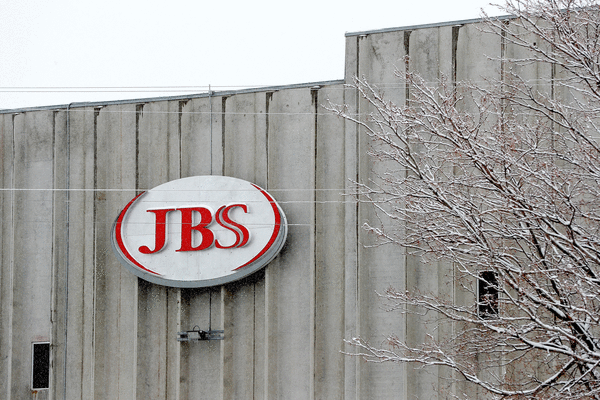
JBS NV, the world’s largest meatpacker, is stepping back from a 2040 net-zero emissions goal, dropping targets for the indirect emissions that make up the bulk of its environmental footprint.
The company in its latest sustainability report adjusted its goals to eliminate targets for so-called Scope 3 greenhouse gas output, which for JBS includes the emissions produced by all of the livestock it slaughters. That’s as the company replaces a 2021 commitment to reach net-zero greenhouse gas emissions by 2040, which covered all three scopes, Jason Weller, global chief sustainability officer, said in an interview.
In its place, the meatpacker maintained a previously-announced goal of reducing Scope 1 and 2 emissions intensity 30% by 2030 compared to a 2019 baseline. It is also now targeting a 70% reduction in those emissions across its processing facilities by 2050.
Weller said JBS is “sharpening and focusing” the company’s goals on what it can directly control and measure, and “moving away from big broad ambitions, which we’ve learned are hard to measure, hard to quantify, hard to get collective action going.”
JBS’s Scope 1 and 2 figures, which track its direct operations and energy use, accounted for barely 4% of its emissions in 2025. The rest were from Scope 3, with nearly all of that coming from the livestock that the meatpacker processes and the feed they require. That so-called purchased goods and services category does not include land use, or deforestation.
The Brazilian meatpacker has in the past faced criticism over its environmental footprint, especially during its process to obtain a U.S. stock listing approved last year.
Stephanie Dowlen, a senior forest campaigner at the Rainforest Action Network, said JBS “never had a credible plan to reduce their excessive GHG emissions.” The latest action shows the company “has no intention of addressing the most significant source of its emissions and fails to even publish on land-use change,” she said.
The company last year called Scope 3 emissions a “significant challenge” because they are “the result of thousands of individual farming operations,” requiring “more collaboration and innovation across our value chain to achieve meaningful reductions.”
“We’re not saying Scope 3 is not important,” Weller said, and JBS will continue reporting those figures annually. “We need to reorient and reposition this in a way we think is going to be more productive and positive for agriculture, and then we’ll get the uplift naturally for Scope 3.”
The move comes after JBS last fall entered a $1.1 million settlement with the New York Attorney General, which said the company had misled the public about its carbon reduction efforts and lacked a viable plan to meet its 2040 net-zero target.
As part of the shift, the company is also foregoing its $100 million investment target in research and development projects to reduce Scope 3 emissions. Those funds are instead “embedded in the business” through direct programs, including one in Brazil that helps small producers comply with environmental regulations and provides access to regenerative production tools, Weller said.
Initiatives like a blockchain platform to track suppliers in Brazil remain in place as well. The company is also maintaining its commitment to not purchase cattle grazed on land in the Amazon that was illegally deforested after 2008, in line with Brazil’s forest code, Weller said.
JBS’s environmental impact was a point of contention last year as the meat processor sought approval for its listing on the New York Stock Exchange, as environmental activists raised concerns over traceability and greenwashing. JBS, which began trading a year ago, fell 3% on Wednesday to the lowest closing price in a month.
While the bulk of JBS revenue comes from operations in the U.S., the company is also the largest meatpacker in Brazil, where deforestation associated with cattle ranching is a major driver of carbon emissions. Producers earlier in the cattle supply chain — like the cow-calf and stocker operations where animals are raised before reaching direct suppliers — have long been scrutinized over expanding land use.
(With assistance from Dayanne Sousa.)
©2026 Bloomberg L.P. Visit bloomberg.com. Distributed by Tribune Content Agency, LLC.









Comments