On birthright citizenship, the Supreme Court 'originalists' split on history and Trump
Published in Political News
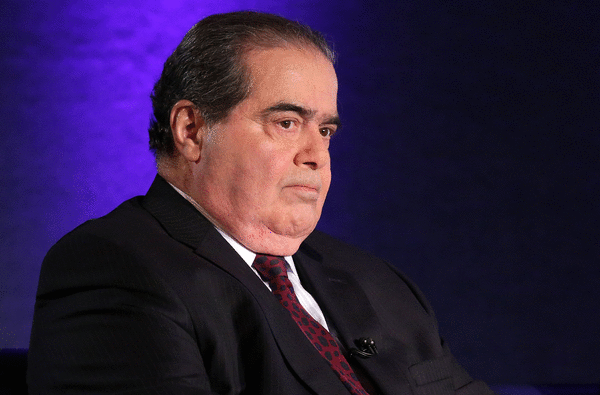
The Supreme Court's conservative justices say they decide cases based on the words and original history of the Constitution — and not on their personal or political views.
Following the lead set by the late Justice Antonin Scalia, they say they see history and "originalism" as a guiding principle to prevent judges from changing the Constitution to adjust to new and changing times.
This text-and-history approach is said to contrast with an evolving or "living Constitution" favored by progressives and liberal activists.
But this year saw a flip of sorts on birthright citizenship.
The foremost conservatives agreed with President Trump that the surge of illegal immigration called for reconsidering the promise of citizenship at birth set out in the 14th Amendment of 1868.
"The number of illegal immigrants in this country exploded" in recent years, Justice Samuel A. Alito Jr. wrote in dissent. The rule of citizenship at birth provides "a powerful incentive to enter or remain in this country illegally," he added.
"The Constitution is an enduring document," wrote Justice Brett M. Kavanaugh, but its rules and meaning must adjust to "modern situations that were unknown or unanticipated by the Constitution's Framers."
In a concurring opinion, he said that "significant illegal immigration into the United States is a new circumstance that was largely unknown as of 1868."
There were no federal immigration laws in the mid-19th century, but it was an era when a surge of Irish immigrants had settled on the East Coast and large numbers of Chinese immigrants came to California.
Under the law, their children were deemed to be citizens at birth.
Among the conservative originalists, only Justice Amy Coney Barrett signed the majority opinion that was written by Chief Justice John G. Roberts Jr. and joined by the three liberals.
The opening words of the 14th Amendment of 1868 say: "All persons born or naturalized in the United States and subject to the jurisdiction thereof are citizens of the United States."
In 1898, the Supreme Court upheld the rule of citizenship at birth in the case of Wong Kim Ark, who was born in San Francisco to Chinese parents.
In an executive order, Trump proposed to end birthright citizenship for the newborns whose parents were in the country illegally or temporarily.
Writing for the court, the chief justice said the words of the 14th Amendment were clear and were clearly understood at the time. He dismissed the "dramatically revisionist view" that has been cited recently.
Kavanaugh voted with the majority to block Trump's order from taking effect. He did so because Congress had adopted birthright citizenship in a 1952 law.
"Consistent with the 14th Amendment, Congress could ... enact new legislation establishing exceptions to birthright citizenship," he wrote.
Justices Clarence Thomas and Alito wrote long dissents arguing that the framers of the 14th Amendment did not or would not have favored birthright citizenship.
They pointed to recent scholarship by law professors that raised questions about the accepted understanding of the 14th Amendment and the citizenship rule.
Thomas said citizenship of the child should turn on whether the parents were "domiciled" in this country. Black people who were enslaved were undoubtedly domiciled here, but the same is not true of temporary visitors.
Justice Neil M. Gorsuch agreed in part with Thomas and questioned whether the newborns of temporary visitors should be deemed as citizens at birth.
Many court commentators were surprised by the close 5-4 divide on the constitutional issue.
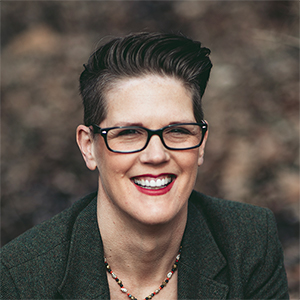
"Given how clear the language was, I expected it to be 7 to 2," said Melissa Murray, a New York University law professor. "I really gasped when I saw it was 5-4. This is not settled. We're not done with this debate."
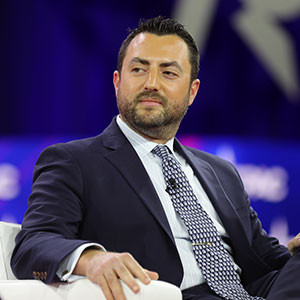
Sarah Isgur, a podcaster and SCOTUSblog analyst, said that "originalism is getting more and more muddled. Either the history matters or it doesn't."
However, she agreed with Kavanaugh's approach of leaving it to Congress to reconsider the issue.
Not all originalists are conservative
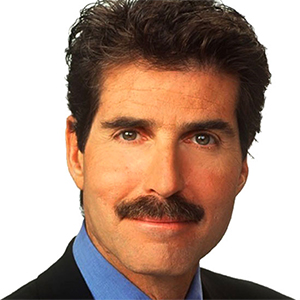
Yale Law Professor Akhil Amar, a constitutional historian, argued that the history of birthright citizenship is clear and not subject to revisionist thinking. He said the Reconstruction Congress adopted this principle of citizenship at birth and stated their intent in clear words in the 14th Amendment.
"When a baby is born on American soil and an American flag flies above, that baby is a birthright citizen, as the Reconstruction Republicans across the land understood," he wrote in February. This rule "has virtually nothing to do with the baby's parents."
Last week, he was mostly cheered by the court's ruling.
"It's a triumph, but it should have been 9-0," Amar said on a review of the court term sponsored by SCOTUSblog. "Shame on the dissenters. They didn't even the address the statute" and its wording.
But the majority led by Roberts "clearly affirmed the plain meaning of the constitutional text and its history. And that's a win," he said.
History has a recurring role at the Supreme Court
Isgur noted the court will hear arguments in the fall on whether the Second Amendment of 1791 gives gun owners a right to have "assault weapons" like AR-15 rifles.
She said the court will decide then between history and changed circumstances.
At issue is whether these modern rapid-fire rifles fit within the history of the gun rights protected by the Second Amendment or instead represent a new and dangerous threat to public safety that was unknown in 1791.
Scalia's opinion upholding gun rights in 2008 is often cited as a model of originalism, but it too emerged from a court divided 5-4.
The Second Amendment says, "A well-regulated Militia, being necessary to the security of a free state, the right of the people to keep and bears Arms, shall not be infringed."
For decades, the Supreme Court had all but ignored the Second Amendment, viewing it as a somewhat outdated provision involving militias, akin to the Third Amendment. It forbids having soldiers "quartered in any house ... in time of peace."
Four liberal dissenters in 2008 said the court should stand by that understanding of history.
Justice John Paul Stevens said the Second Amendment was added to the Constitution to protect state militias from federal interference. Moreover, the reference to "bear arms" suggests it was about militias, he said.
But Scalia's opinion stands as the landmark precedent, and he said the dissenters had the history all wrong.
The right to have guns for self-defense arose in England and came to the American colonies. "By the time of the founding, the right to have arms had become fundamental for English subjects," he wrote.
The Second Amendment did not establish a new right, he said. Rather, it "codified a pre-existing right (of) having and using arms for self-preservation and [defense]," he wrote.
"There seems to us no doubt, on the basis of both text and history," Scalia wrote, "that the Second Amendment conferred an individual right to keep and bear arms."
_____
©2026 Los Angeles Times. Visit latimes.com. Distributed by Tribune Content Agency, LLC.










































Comments